Onde-onde (Ondeh-ondeh)
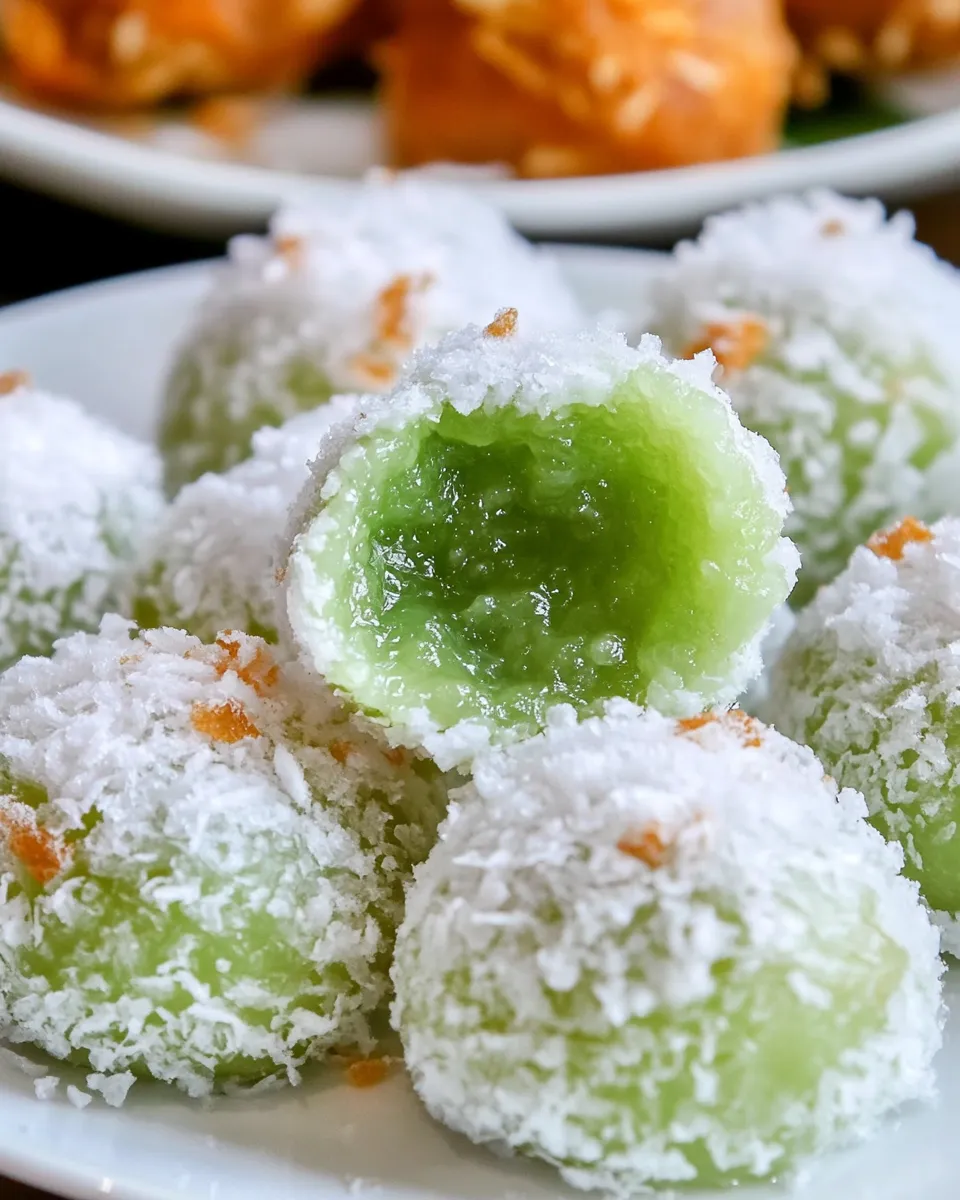
These delightful little glutinous rice balls, popularly known as Onde-onde or Ondeh-ondeh, are a beloved traditional treat in Southeast Asia. Bursting with sweet Gula Melaka, the chewy exterior paired with the rich pandan flavor creates an unforgettable experience for your taste buds. If you’re looking to impress your family and friends with a unique dessert, this is the recipe to try. Let’s dive into the world of Onde-onde and explore how you can create this irresistible treat in your own kitchen.
What Sets This Recipe Apart
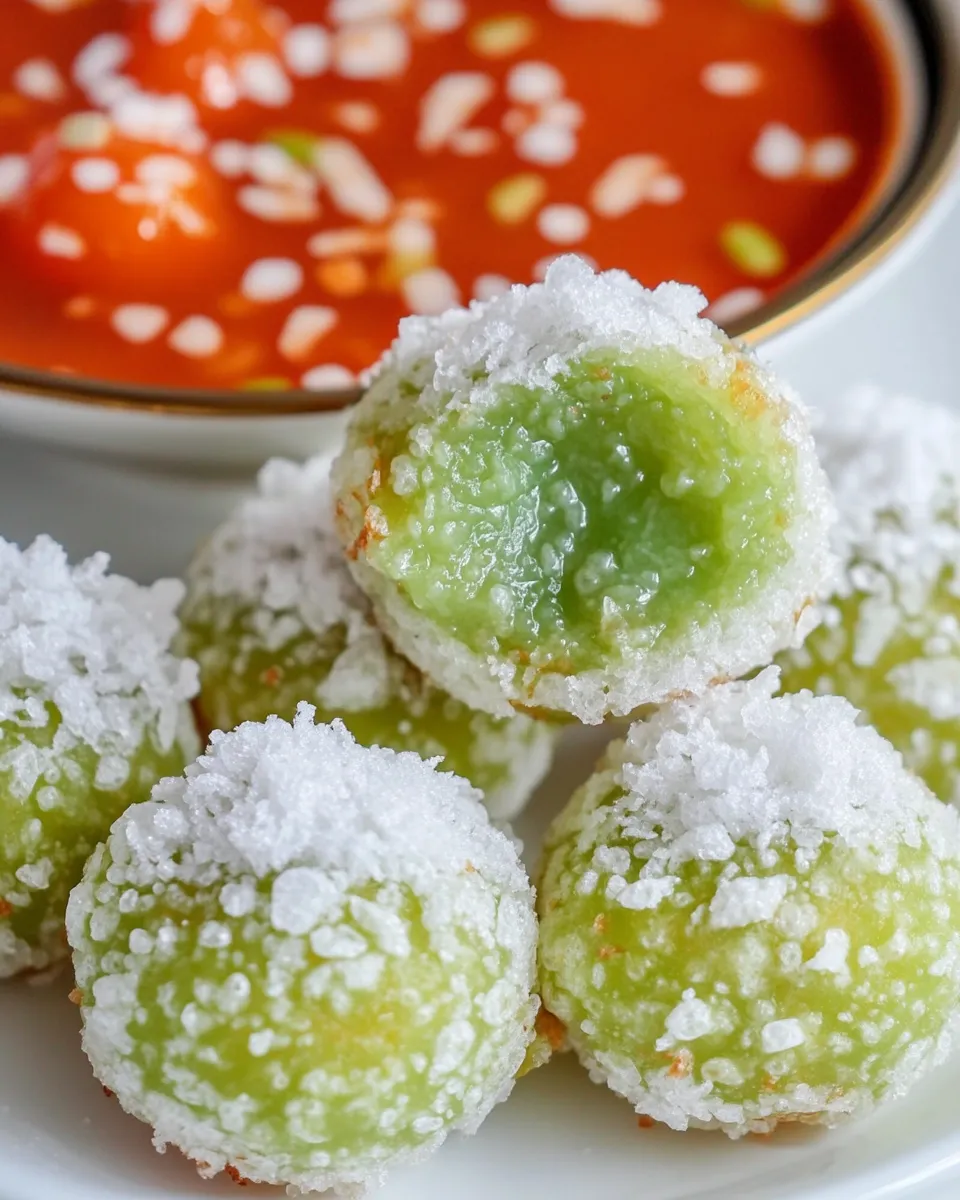
What makes this Onde-onde recipe stand out is the perfect balance of textures and flavors. The use of fresh pandan juice not only imparts a beautiful green hue but also enriches the taste profile, making these sweet bites even more enchanting. The combination of chewy glutinous rice flour and the rich, caramel-like sweetness of finely chopped Gula Melaka creates a symphony of flavors that is both comforting and exotic. Additionally, rolling the cooked balls in freshly grated coconut adds a delightful nuttiness that elevates the entire experience. This recipe brings together tradition, flavor, and a touch of creativity, making it perfect for any occasion.
Shopping List
- 8 oz glutinous rice flour
- 200 ml pandan juice (freshly extracted is best for flavor)
- 3 oz grated coconut (preferably fresh)
- 1 pinch sea salt
- 5 oz Gula Melaka or finely chopped palm sugar
Setup & Equipment
- Mixing Bowl: For combining the glutinous rice flour and pandan juice.
- Steamer: To cook the Onde-onde, ensuring they are perfectly chewy.
- Large Plate: To hold the grated coconut after it’s been steamed.
- Measuring Cups and Spoons: For accurate ingredient measurements.
- Plastic Wrap: To cover the dough while you prepare the filling.
Onde-onde (Ondeh-ondeh): From Prep to Plate
Step 1: Prepare the Pandan Juice
To start, rinse and chop fresh pandan leaves into small pieces. Blend them with a little water until smooth. Strain the mixture through a fine sieve or cheesecloth to extract the vibrant green juice. You will need 200 ml for the dough.
Step 2: Make the Dough
In a mixing bowl, combine the glutinous rice flour, sea salt, and the freshly extracted pandan juice. Mix until a smooth and pliable dough forms. If the dough is too dry, add a little water; if it’s too wet, sprinkle in some more glutinous rice flour.
Step 3: Prepare the Filling
Finely chop the Gula Melaka or palm sugar into small pieces to ensure it melts easily when cooked. Set aside.
Step 4: Form the Balls
Take a small piece of dough and flatten it in your palm. Place a small amount of the chopped Gula Melaka in the center and carefully wrap the dough around it, sealing it completely. Roll the ball gently between your palms to create a smooth surface. Repeat this process until all the dough and filling are used.
Step 5: Steam the Onde-onde
Prepare your steamer by bringing water to a boil. Line the steamer basket with parchment paper or lightly grease it to prevent sticking. Place the balls in the steamer, ensuring they are spaced apart. Steam for about 10-15 minutes until they float to the surface, indicating they’re cooked through.
Step 6: Coat with Grated Coconut
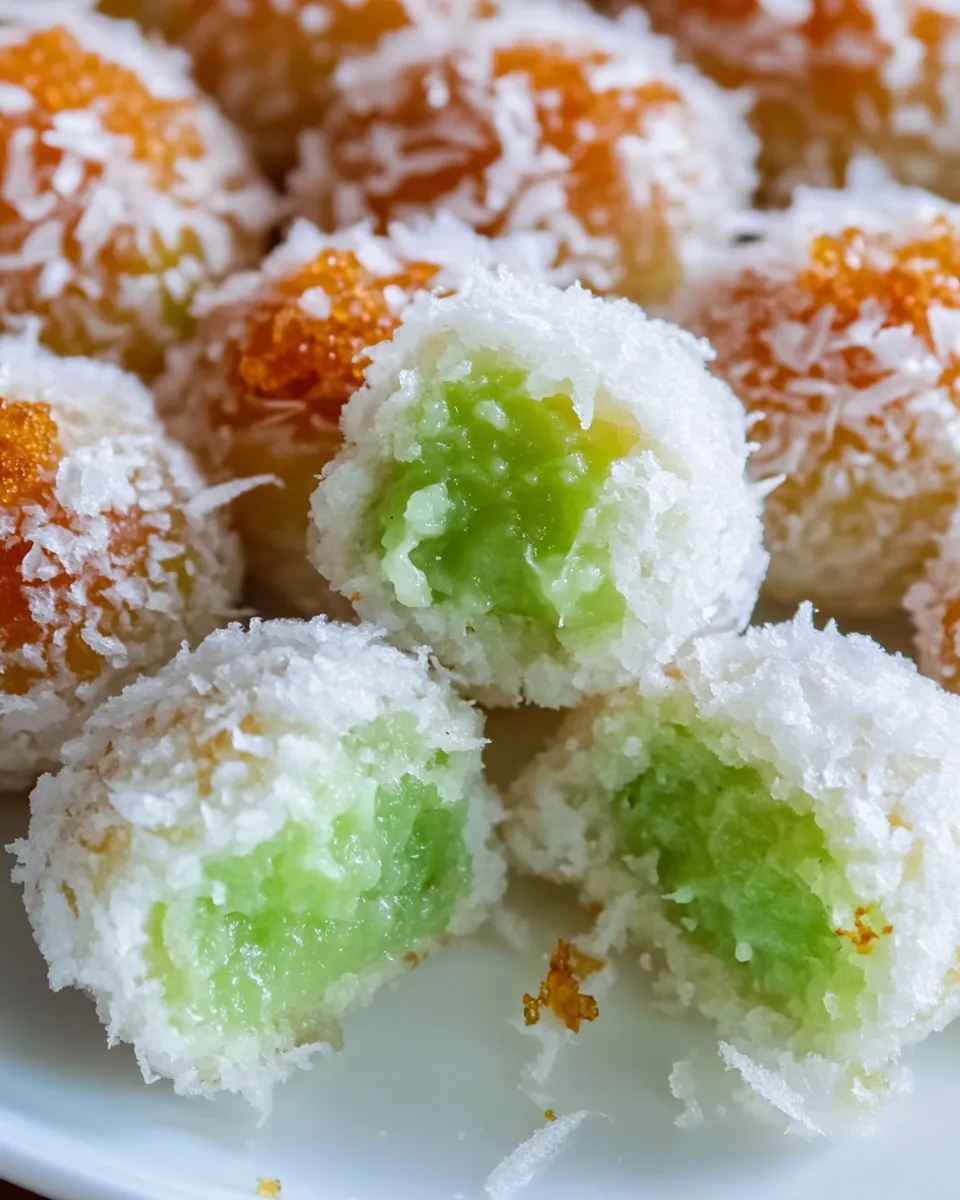
While the Onde-onde are steaming, prepare the grated coconut. Steam it lightly with a pinch of salt for about 5 minutes to enhance its flavor. Once the Onde-onde are cooked, carefully remove them from the steamer and roll each ball in the steamed grated coconut until fully coated.
Step 7: Serve and Enjoy
Serve your Onde-onde warm for the best experience. The contrast of the chewy exterior with the burst of sweet filling is truly delightful. Enjoy them as a snack, dessert, or even as a festive treat!
Substitutions by Diet
- Gluten-Free: The recipe is naturally gluten-free due to the use of glutinous rice flour.
- Vegan: This recipe is vegan as it does not include any animal products.
- Low Sugar: Substitute Gula Melaka with a sugar-free alternative if desired, keeping in mind it may alter the flavor.
Recipe Notes & Chef’s Commentary
When making Onde-onde, the key is to ensure the dough is neither too dry nor too wet. Achieving the right consistency will determine how well they hold together during cooking. If you can’t find fresh pandan leaves, store-bought pandan extract can be used, but the flavor may not be as vibrant.
- Feel free to experiment with different fillings, such as sweetened red bean paste or even chocolate for a modern twist.
- Make sure to serve them fresh, as they taste best when warm.
- If you’re preparing these for a gathering, consider making a larger batch. They are sure to be a hit!
Refrigerate, Freeze, Reheat
Onde-onde are best enjoyed fresh, but you can store leftovers in an airtight container in the refrigerator for up to 2 days. If you wish to freeze them, place them in a single layer on a baking sheet until they are firm, then transfer to a freezer-safe bag. They can be frozen for up to 1 month. To reheat, steam for a few minutes until warmed through—this will help restore their delightful chewy texture.
Onde-onde (Ondeh-ondeh) Q&A
Can I use regular rice flour instead of glutinous rice flour?
No, regular rice flour will not yield the same chewy texture that glutinous rice flour provides. It’s essential to use glutinous rice flour for authentic Onde-onde.
What is the best way to store leftover Onde-onde?
Store leftover Onde-onde in an airtight container in the refrigerator for up to 2 days. You can also freeze them for longer storage, but they are best enjoyed fresh.
Can I add food coloring to the dough?
Yes, if you want to create a more colorful presentation, you can add a few drops of food coloring to the dough. However, keep in mind that the traditional flavor comes from the pandan juice.
Why did my Gula Melaka not melt properly inside the dough?
If the sugar is too coarse or not chopped finely enough, it may not melt completely during cooking. Ensure you finely chop the Gula Melaka for the best results.
The Last Word
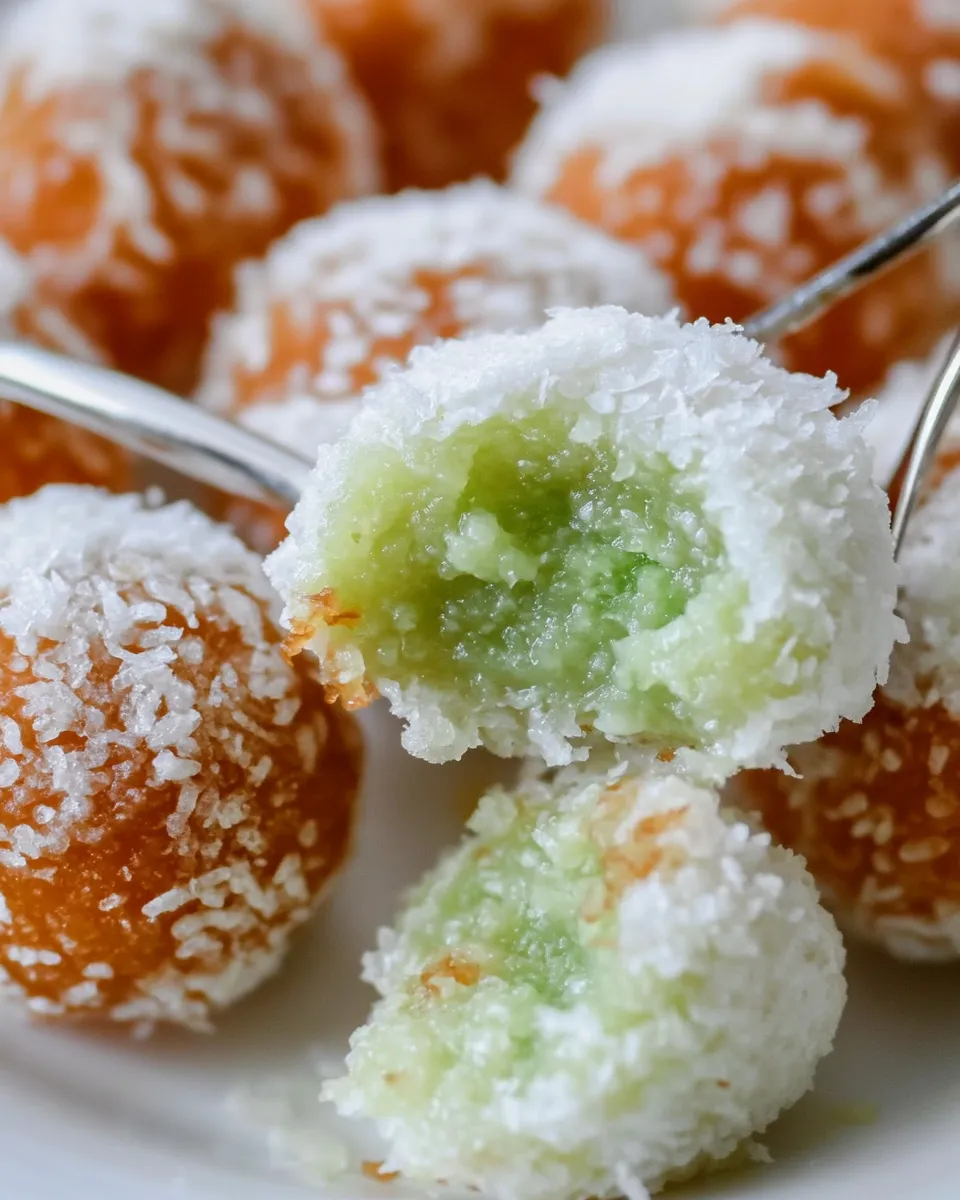
Incorporating traditional flavors and techniques, Onde-onde (Ondeh-ondeh) are not just a treat; they are a celebration of culture and community. The joy of biting into these chewy little balls and experiencing the sweet, gooey center is unparalleled. Whether enjoyed during special occasions or as an everyday snack, Onde-onde holds a special place in the hearts of many. So gather your ingredients, follow this guide, and embrace the art of making Onde-onde. With a little patience and love, you will create a delightful dessert that’s sure to impress everyone who takes a bite. Happy cooking!
Onde-onde (Ondeh-ondeh)
Ingredients
Equipment
Method
- Rinse and chop fresh pandan leaves into small pieces. Blend with a little water until smooth and strain through a fine sieve or cheesecloth to extract 200 ml of pandan juice.
- In a mixing bowl, combine the glutinous rice flour, sea salt, and freshly extracted pandan juice. Mix until a smooth and pliable dough forms.
- Finely chop the Gula Melaka or palm sugar into small pieces and set aside.
- Take a small piece of dough, flatten it in your palm, place a small amount of chopped Gula Melaka in the center, and carefully wrap the dough around it, sealing it completely. Roll to create a smooth ball.
- Prepare your steamer by boiling water. Line the steamer basket with parchment paper or grease it. Place the balls in the steamer and steam for about 10-15 minutes until they float.
- While steaming, prepare grated coconut. Steam lightly with a pinch of salt for about 5 minutes. Once the Onde-onde are cooked, roll each ball in the steamed grated coconut until fully coated.
- Serve your Onde-onde warm for the best experience and enjoy!
Notes
- Ensure the dough consistency is just right for best results.
- Experiment with different fillings like sweetened red bean paste.
- These treats are best enjoyed fresh, but can be stored in an airtight container for up to 2 days.