Salmon Panang Curry
If you’re looking for a dish that brings a burst of flavor and a touch of exotic elegance to your dinner table, then look no further than Salmon Panang Curry. This dish marries the rich, buttery taste of salmon with the vibrant spices of Panang curry, creating a culinary experience that is both comforting and sumptuous. With its creamy coconut base, fresh vegetables, and fragrant herbs, Salmon Panang Curry is perfect for a cozy weeknight dinner or a special occasion. The beauty of this recipe lies not only in its flavors but also in its simplicity, making it accessible for home cooks of all skill levels.
Reasons to Love Salmon Panang Curry
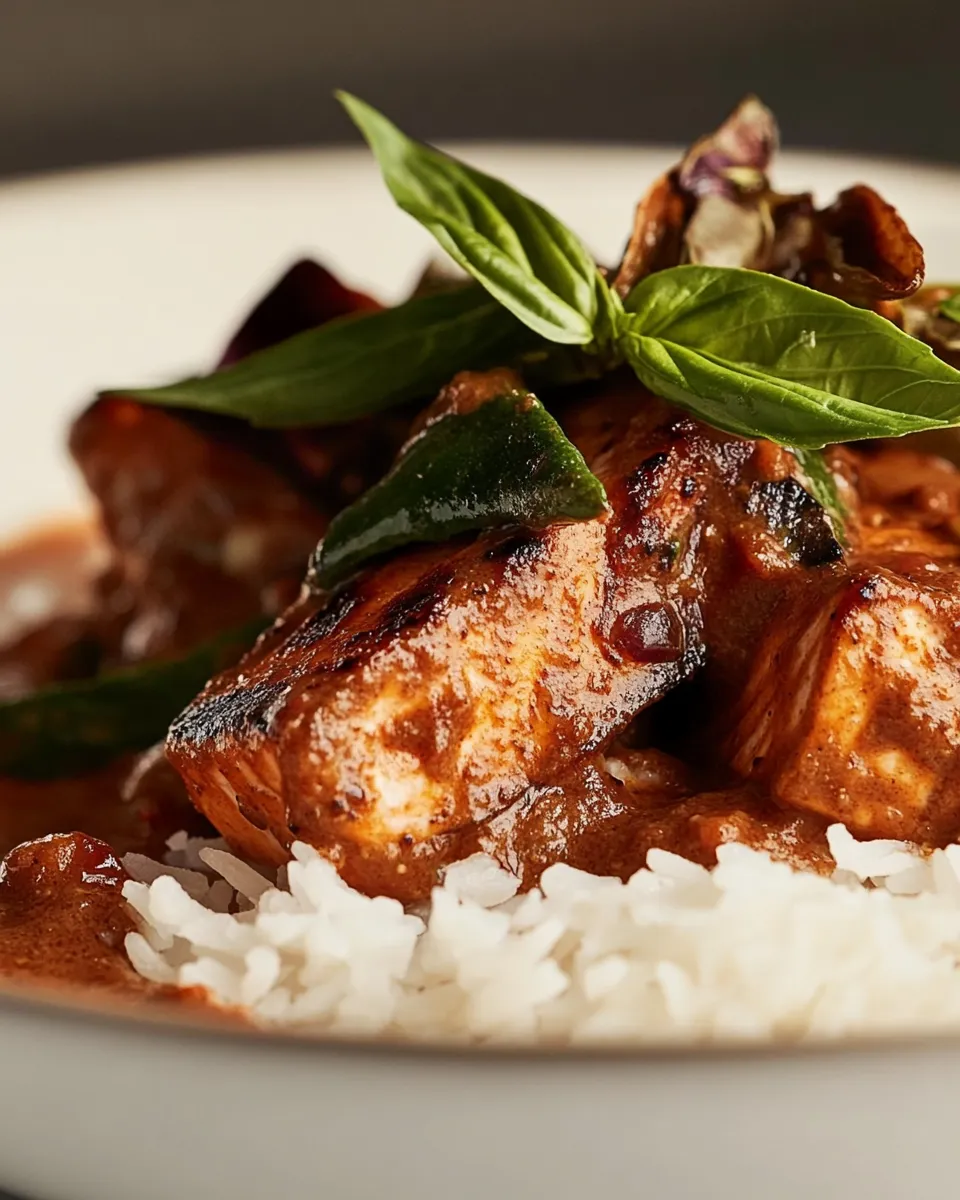
There are countless reasons to fall in love with Salmon Panang Curry. Here are just a few:
- Rich Flavor: The combination of salmon and Panang curry paste creates a deep, complex flavor profile that is hard to resist.
- Quick and Easy: This recipe comes together in about 30 minutes, making it perfect for busy nights.
- Healthy Ingredients: Packed with vegetables and healthy fats from the salmon, this dish is a nutritious choice for any meal.
- Customizable: You can easily swap out vegetables or adjust the spice levels to suit your preference.
- Impressive Presentation: The vibrant colors and aromatic herbs make this dish a feast for the eyes as well as the palate.
Your Shopping Guide
Before you dive into cooking, here’s a comprehensive shopping list to ensure you have everything you need for your Salmon Panang Curry:
- Salmon Fillet (24 oz): Fresh, skin-on fillets are ideal for this recipe.
- Panang Curry Paste (6 tbsp): Look for Mae Ploy brand for authentic flavor.
- Coconut Milk (3 cups): Full-fat coconut milk adds creaminess.
- Long Beans (1 cup): Cut into 2-inch pieces for texture.
- Carrots (1 cup): Sliced to 0.2-inch thickness for even cooking.
- Red Onion: Cut into wedges to add sweetness.
- Shiitake Mushrooms (1 cup): Sliced for an earthy flavor.
- Palm Sugar (1 tbsp): For a hint of sweetness.
- Kaffir Lime Leaves (8 leaves): Torn to release their fragrant oils.
- Thai Bird’s Eye Chilies (3): Chopped for heat; adjust based on your spice preference.
- Fish Sauce (3 tsp): Adds depth and umami; can be substituted if needed.
- Lime Juice (1 tbsp): Freshly squeezed for brightness.
- Salt: To taste.
- Unsalted Chicken Stock (1 cup): Use as a base for the sauce.
- Thai Basil Leaves (1 cup): Roughly torn for freshness.
- Roasted Peanuts (for topping): Chopped for a crunchy finish.
- Extra Thai Basil Leaves: For garnish.
- Oil for frying (1 tbsp): Choose a neutral oil for sautéing.
What You’ll Need (Gear)
Gather these kitchen essentials before you start cooking:
- Large Skillet or Wok: For frying and simmering.
- Wooden Spoon: For stirring the curry.
- Measuring Cups and Spoons: To ensure accuracy in your ingredients.
- Knife and Cutting Board: For chopping vegetables and fish.
- Serving Bowl: To present your delicious dish.
Step-by-Step: Salmon Panang Curry
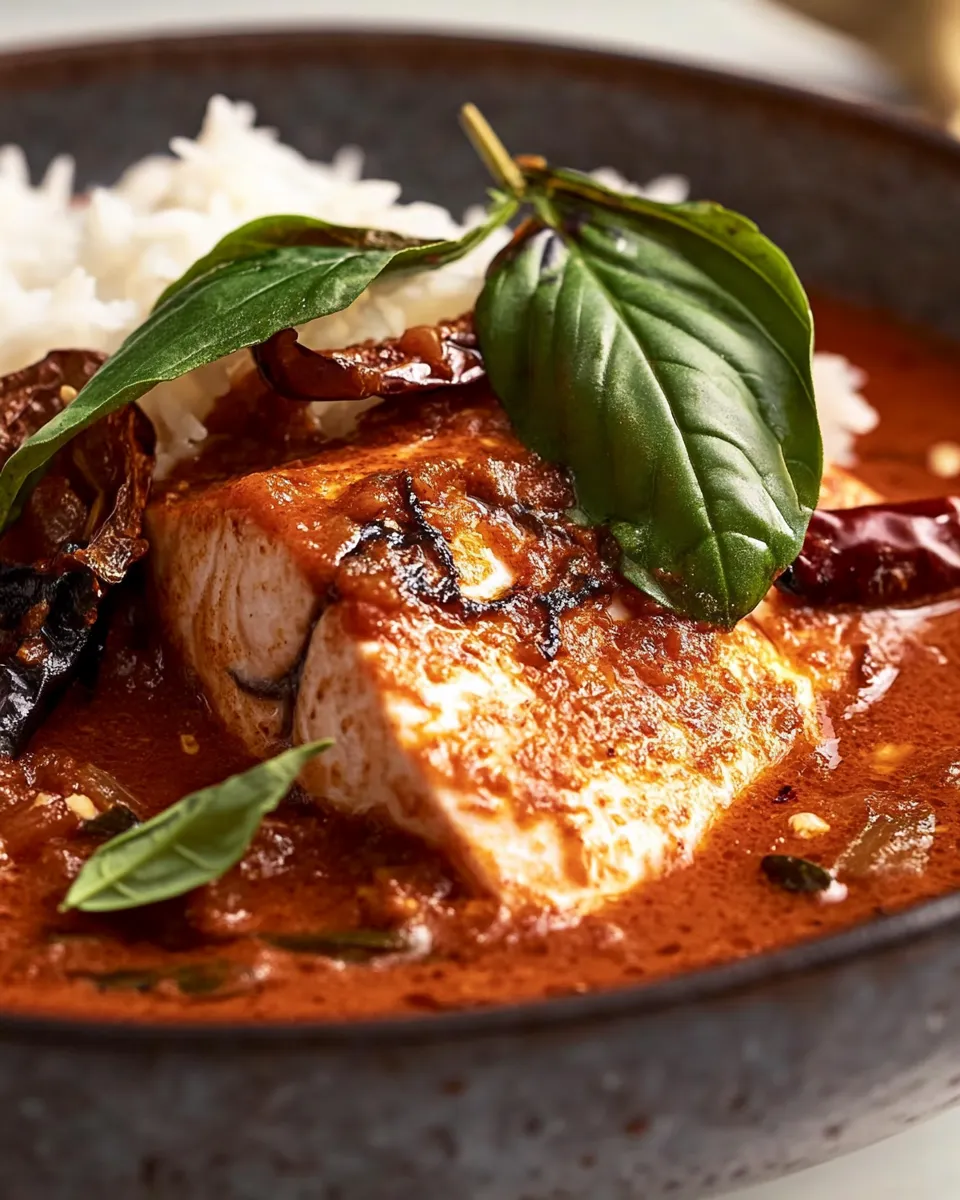
Now that you have everything prepped, let’s dive into making your Salmon Panang Curry.
Step 1: Prepare the Ingredients
Start by cutting the long beans, carrots, red onion, and shiitake mushrooms as indicated in the shopping guide. Chop the Thai bird’s eye chilies and roughly tear the Thai basil leaves. Set everything aside.
Step 2: Sauté the Aromatics
In a large skillet or wok, heat 1 tablespoon of oil over medium heat. Add the red onion and sauté until it becomes translucent, approximately 2-3 minutes.
Step 3: Add the Curry Paste
Stir in the 6 tablespoons of Panang curry paste and cook for another 2 minutes, allowing the paste to become fragrant and slightly toasted.
Step 4: Incorporate the Vegetables
Add the long beans, carrot slices, and shiitake mushrooms to the skillet. Stir well to coat the vegetables with the curry paste and cook for 4-5 minutes until they begin to soften.
Step 5: Pour in the Coconut Milk
Slowly add the 3 cups of coconut milk, stirring to combine. Bring the mixture to a gentle simmer.
Step 6: Season the Curry
Add the torn kaffir lime leaves, 3 teaspoons of fish sauce, 1 tablespoon of palm sugar, and the chopped chilies. Stir to integrate the flavors, and allow the curry to simmer for another 5 minutes.
Step 7: Add the Salmon
Gently place the salmon fillets skin-side down into the curry. Cover the pan and let the salmon cook for about 8-10 minutes or until cooked through and flaky.
Step 8: Finish with Lime Juice and Thai Basil
Once the salmon is cooked, stir in 1 tablespoon of lime juice and the torn Thai basil leaves. Taste and adjust seasoning with salt if necessary.
Step 9: Serve and Garnish
Ladle the Salmon Panang Curry into bowls, top with chopped roasted peanuts, and garnish with extra Thai basil leaves. Serve hot over steamed rice or with warm naan for a complete meal.
Swap Guide
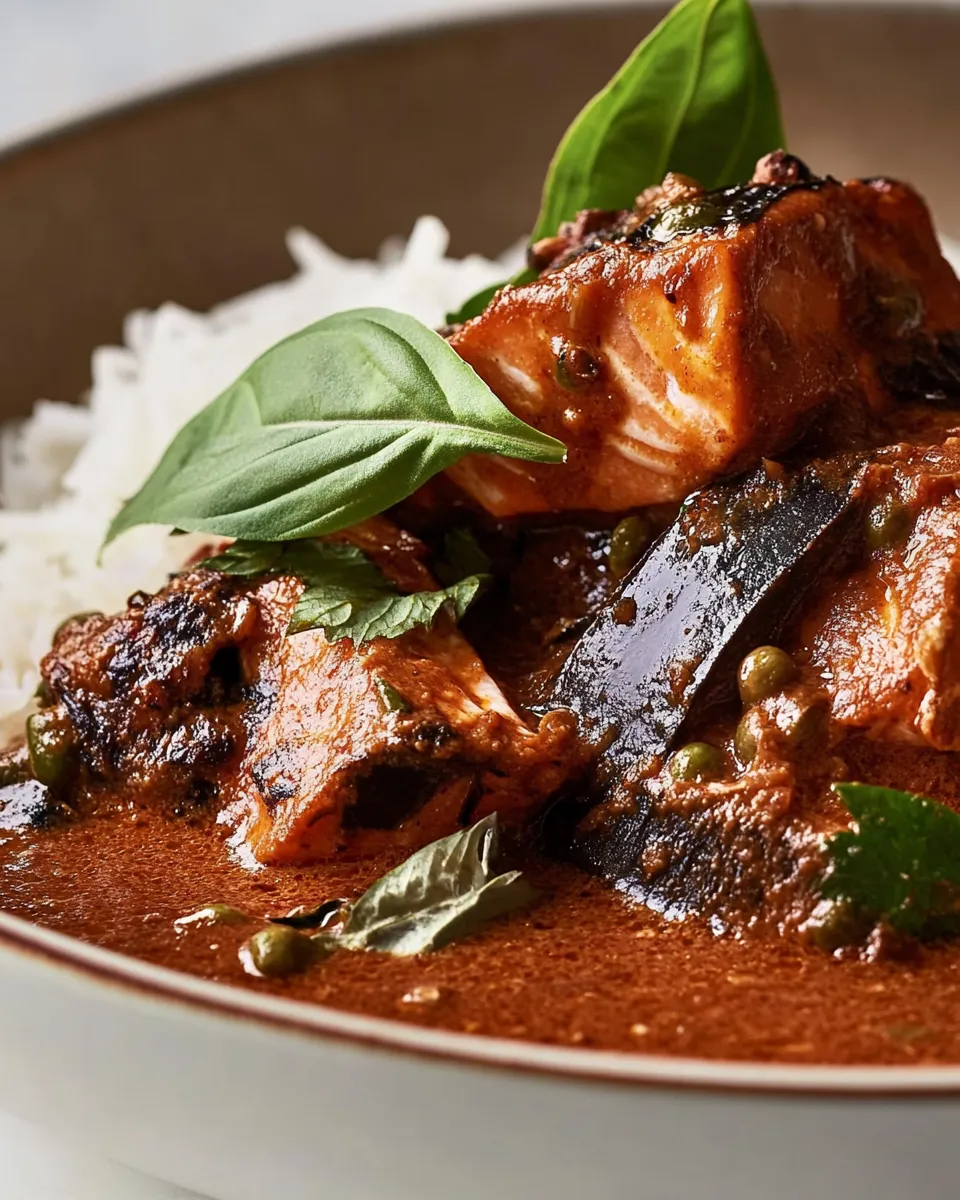
If you’re missing some ingredients or want to customize your dish, here are some easy swaps:
- Salmon: Substitute with any firm fish like cod or even tofu for a vegetarian option.
- Coconut Milk: Use almond milk or soy milk for a lighter alternative, but the flavor will be different.
- Long Beans: Green beans or snap peas work well in place of long beans.
- Palm Sugar: You can use brown sugar or honey if palm sugar is unavailable.
- Fish Sauce: Soy sauce can be used as a vegetarian alternative.
Troubleshooting Tips
Cooking can sometimes go awry, but here are some tips to help you troubleshoot:
- Too Spicy: Add more coconut milk to mellow the heat.
- Too Thick: If the curry is too thick, add a bit more chicken stock or water to reach your desired consistency.
- Salmon Overcooked: Keep an eye on the cooking time; salmon cooks quickly, and it’s best to remove it from heat as soon as it flakes easily.
- Curry Lacks Depth: If the flavor seems flat, a touch more fish sauce or lime juice can brighten it up.
Store, Freeze & Reheat
If you have leftovers (if you’re lucky!), here’s how to store them:
- Store: Keep in an airtight container in the fridge for up to 3 days.
- Freeze: This curry can be frozen for up to 2 months. Just store it in freezer-safe containers.
- Reheat: Gently reheat on the stove over low heat, adding a splash of water or stock to loosen the curry if needed.
Ask & Learn
Can I use a different type of fish for this recipe?
Absolutely! Firm white fish like cod or halibut works great, and you can even use shrimp if you prefer seafood.
Is Panang curry always spicy?
Panang curry can vary in spice level. Adjust the number of chilies based on your personal heat preference.
What is the difference between Panang curry and red curry?
Panang curry is typically thicker and creamier than red curry due to the addition of ground peanuts and has a distinct flavor from kaffir lime leaves.
Can I make this recipe ahead of time?
Yes! You can prepare the curry ahead of time and reheat it when ready to serve. Just be mindful of the freshness of the salmon if preparing in advance.
Next Steps
Now that you have all the details to create a mouthwatering Salmon Panang Curry, gather your ingredients and get cooking! Whether it’s a weeknight dinner or a gathering with friends, this dish is sure to impress. Pair it with steamed jasmine rice and your favorite sides, and enjoy the delightful flavors of this vibrant curry. As you savor each bite, you’ll understand why Salmon Panang Curry has become a beloved dish in many homes. Happy cooking!
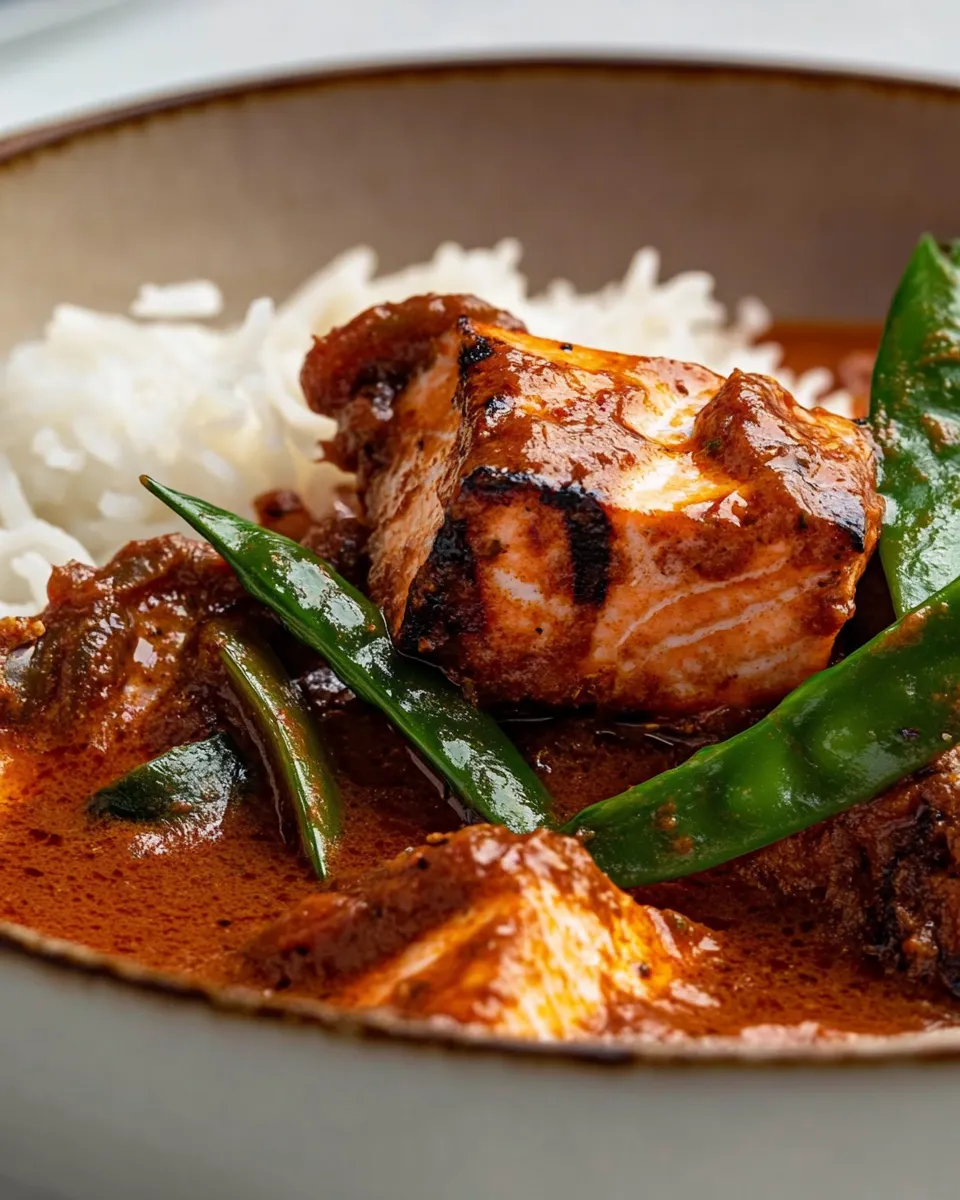
Salmon Panang Curry
Ingredients
Equipment
Method
- Step 1: Prepare the Ingredients - Cut the long beans, carrots, red onion, and shiitake mushrooms as indicated. Chop the chilies and tear the basil leaves. Set aside.
- Step 2: Sauté the Aromatics - Heat 1 tablespoon of oil in a large skillet over medium heat. Add the red onion and sauté until translucent, about 2-3 minutes.
- Step 3: Add the Curry Paste - Stir in the Panang curry paste and cook for another 2 minutes, letting it become fragrant.
- Step 4: Incorporate the Vegetables - Add the long beans, carrot slices, and shiitake mushrooms. Stir to coat and cook for 4-5 minutes until slightly softened.
- Step 5: Pour in the Coconut Milk - Slowly add the coconut milk and bring to a gentle simmer.
- Step 6: Season the Curry - Add the kaffir lime leaves, fish sauce, palm sugar, and chilies. Stir and let simmer for 5 minutes.
- Step 7: Add the Salmon - Gently place the salmon fillets skin-side down into the curry. Cover and cook for 8-10 minutes until flaky.
- Step 8: Finish with Lime Juice and Thai Basil - Stir in lime juice and torn basil leaves. Adjust seasoning with salt if needed.
- Step 9: Serve and Garnish - Serve the curry hot, topped with chopped peanuts and extra basil. Enjoy!
Notes
- Store leftovers in an airtight container in the fridge for up to 3 days.
- You can freeze the curry for up to 2 months in freezer-safe containers.
- Gently reheat on the stove, adding a splash of water or stock if needed.